

🏆 Winner of the 2012 SIGCHI Student Design Competition
FOR


CONTEXT
The project started as a school assignment based on a real competition challenge. We submitted it to the competition and presented it in Austin, TX during the conference.
ROLE
We tackled the project as a team of four. My area of focus was the initial research, problem framing and prototyping.
Brief
Considering the Experience of Home from Within and Without
This year’s challenge is to design an object, interface, system, or service intended to help us to develop and share awareness, understanding or appreciation for our domestic experience as it relates to space, place, and threshold.
– Excerpt from the 2012 SDC design brief
As we were all student at the time, we chose to scope our focus on a subject that was close to us: cohabitation with roommates.
Research
In order to establish a strong design opportunity, we relied on series of research techniques to understand roommates’ needs and compare their different life cycles.
GUIDED TOURS AND INTERVIEWS
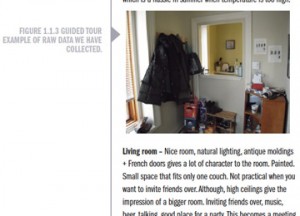
We invited participants to give us a guided tour of their living quarters, where we collected photos and conducted in situ interviews.
DIARIES
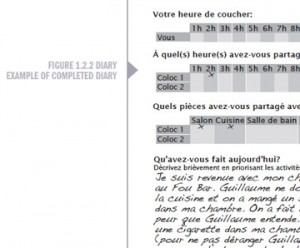
We requested the participants to fill a daily diary to measure the life cycles of each roommate and how they use the space they share, their everyday life, their perception, and feelings.
WORD ASSOCIATION
As a wrap up exercise we probed participants with keywords related to cohabitation end asked them to share the first word that came to mind. We then mapped them across

Definition
Amongst other insights, we identified that roommates living asynchronous lifestyles, meaning that they had different schedules and habits, had a harder time understanding what their roommates needed in terms of privacy and quietness and vice versa. This resulted in some unecessary frictions between roommates.
We decided to explore privacy management as our key issue for the preservation of a respectful cohabitation.
Ideation
Throughout our team workshops, we established principles our solution should align to:
- Non intrusive
- Tacit
- Respectful
- Spontaneous
With these principles in mind, we quickly identified the typical mobile app form as being unfit form factor and focused on ambient technology.
Insight
Uncovering existing means of communicating to roommates
Throughout our concept exploration we revisited our research material to realize that there was already some well established cues used to communicate needs to a various extend: these revolved around the room door.
First of all, the door is a communication device on it’s own: an open door lets visitors see what is going on inside and to some extent is an invitation that it’s OK to enter, on the other end, a closed door acts as a barrier to the exterior preventing visitors entering or seeing inside.
Two examples of door-related communication devices.


Solution Orientation
The door as a communication device.
Prototype
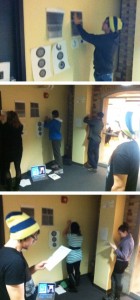
We used paper prototypes to test our concepts with over ten participants, assessing overall acceptance, usability, and ergonomic value through iterative evaluation at every stage of our design development, culminating in the presentation and discussion of the final concept with potential users.
Concept
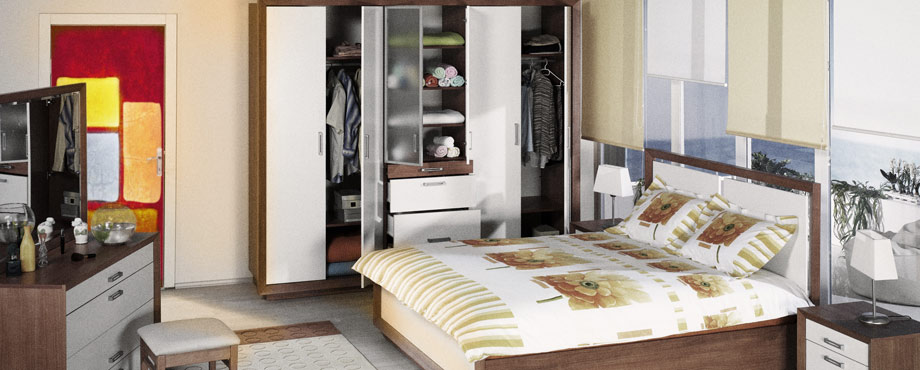
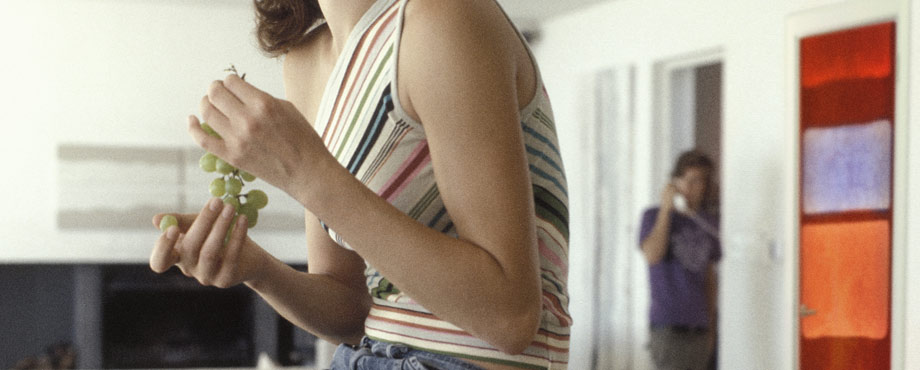
To support the concept, I produced photo and video mockups, carefully selecting the most compelling visual elements to bring the idea to life. The photo mockups showcased the product in various real-life scenarios, providing a sense of its practical application.


Why Shoji?
A shoji is a traditional Japanese sliding door or room divider made with translucent paper. Shoji doors are used in Japanese architecture to divide spaces, create privacy, and allow light to diffuse gently through rooms.
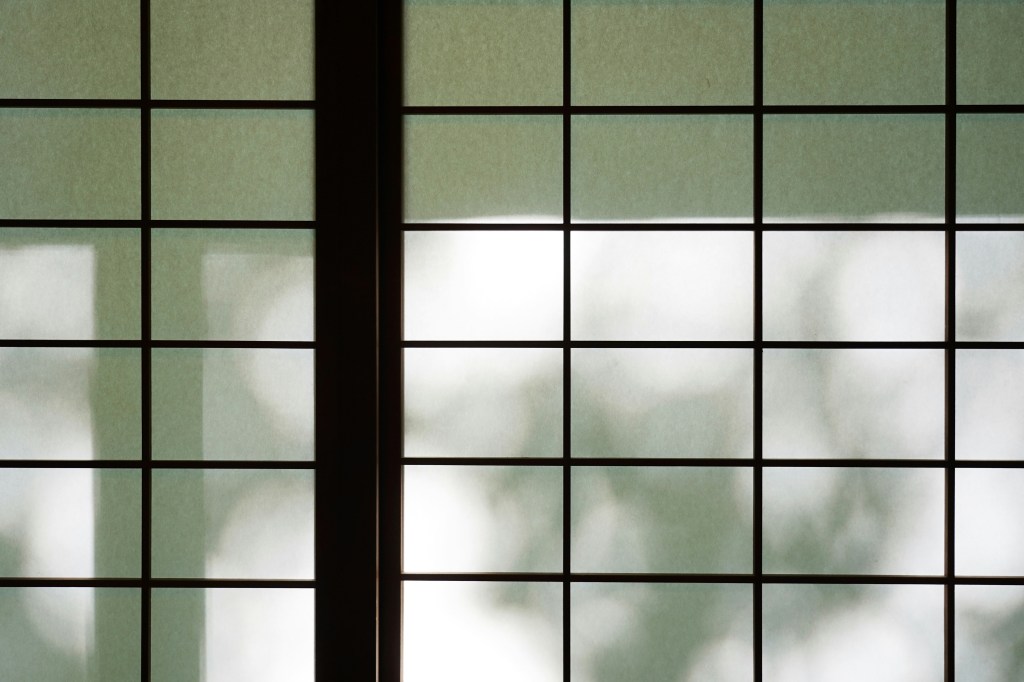
Just like shoji, our approach is about dividing space and protecting boundaries, while letting just enough information pass through.
Outcome
We were thrilled to have the opportunity to showcase Shoji at ACM CHI 2012, held in Austin, Texas. were came in first against universities from all corners of the globe. Winning this competition was a significant achievement for us, and it further fueled our passion for innovation and excellence in our field.
There was a very broad exploration of the whole design space:
– Gilbert Cockton, Chair of the 2012 Student Design Competition
There was a breath of questioning, integration and critical response that really strook us.
My Learnings
From a personal standpoint, this opportunity has truly cemented the trust I hold in the design process. Upon reflection, it has empowered me with the confidence to strategically challenge project briefs, ensuring that we address the right issues and that everyone possesses a strong foundation to craft a relevant solution.
 Ben Rochon