

FOR

SUMMARY
This project leveraged Mixed Reality (MR) to improve layout efficiency in supply chain tasks. Starting as a self-initiated effort, we secured funding to develop a proof of concept using Hololens. The demo showcased MR’s potential, leading to customer interest, valuable feedback, and patent generation.
Brief
This project emerged as a direct outcome of our prior research, which focused on how employees interact with layout instructions during their tasks. Through shadowing workers, we identified that handling printed or digital instructions was often cumbersome and inefficient. The challenge we posed for this spinoff inititative was:
What if we could place layout instructions directly in the real world, where they are needed most?
Project Approval and funding
This was a self-initiated project where our team took the initiative to pitch for funding directly to the CTO. We developed a comprehensive proposal, including a budget and roadmap, to secure the resources needed for the project. Our pitch emphasized the potential of leveraging Hololens, a cutting-edge Mixed Reality (MR) device, to develop a proof of concept that would bring our vision to life.
Use Cases Explored
Supply chains are replete with layout-based tasks. Initially, our research focused on product layouts on shelves, but we expanded our exploration to include other critical areas, such as container packing orders and pallet layouts. These use cases were selected for their potential impact and were the focal points of our initial efforts.
Technology Implementation
We selected Hololens for its advanced Mixed Reality capabilities, including 3D camera tracking and the ability to superimpose digital objects into the physical world. The Hololens allowed us to prototype and test our concept in real-world settings, providing an interactive and immersive experience for users.
Demos
Our first demo centered on showcasing how Hololens could optimize the placement of items within a container. This demonstration sparked interest among our lab colleagues, who were concurrently developing optimization algorithms for packing cylindrical objects. A collaborative discussion ensued about the challenges of balancing computer-generated optimal solutions with human executability—highlighting the potential complexity for workers when computers prioritize space optimization over intelligibility.
Outcome and Impact
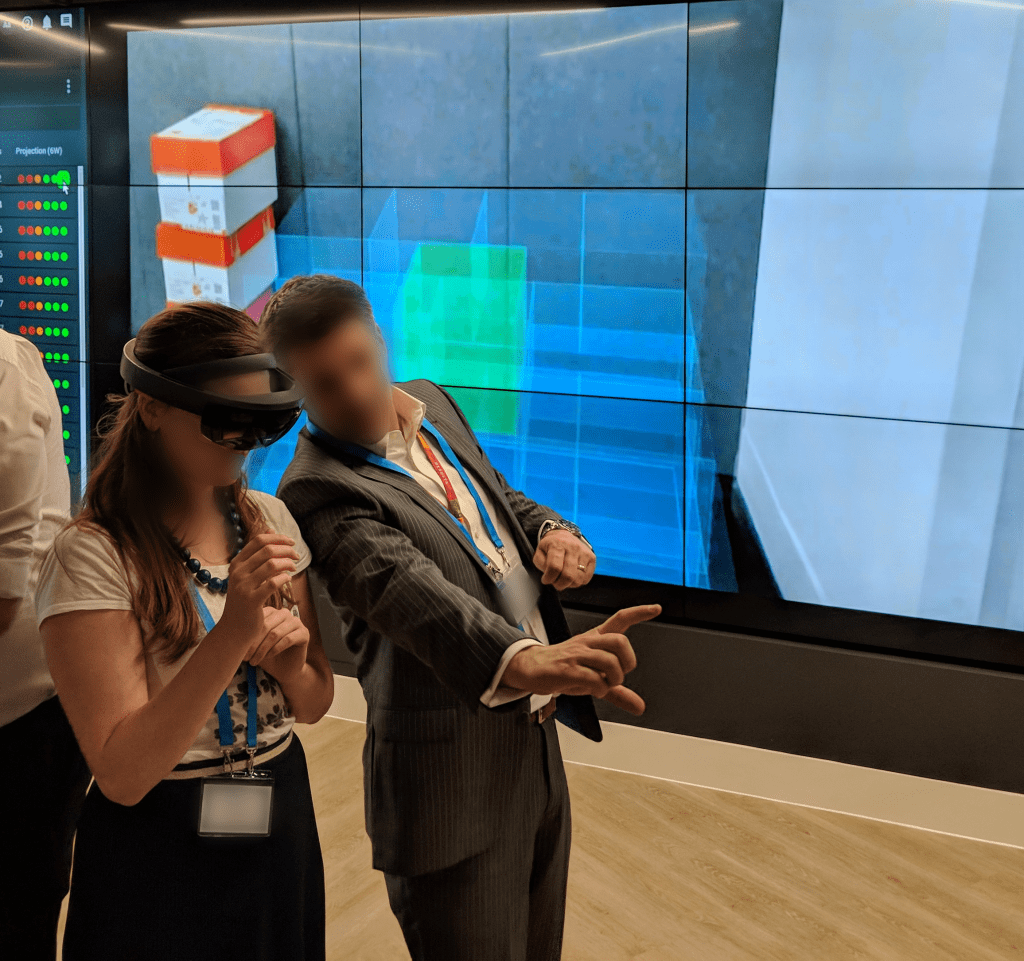
The project significantly enhanced our lab’s visibility and facilitated outreach to customers and industry stakeholders. Our demo was met with enthusiasm, particularly regarding the training potential of such Mixed Reality products. The feedback we received was instrumental in refining our approach and deepening our understanding of industry challenges. As a testament to our innovative work, this project also led to the generation of 2+ patents.
My Learnings
- Applied an intrapreneurial mindset by turning previous user research insights into actionable novel opportunities.
- Successfully communicated project plans to executives, securing necessary funding.
- Leveraged prototypes as a research tool, gaining deeper insights through customer engagement.
 Ben Rochon