

FOR

SUMMARY
I led a service design initiative to improve the customer onboarding journey for commercial EV charger site hosts, expanding the scope from a product-centric brief to a holistic service design solution that addressed strategic gaps across technology, operations, and the business model. This approach resulted in organizational alignment and set the foundation for future product development.
Brief
The challenge was to enhance the customer onboarding experience for owners of commercial EV chargers, referred to as site hosts. Initially, we had a broad understanding of internal inefficiencies and external dissatisfaction with the process. The brief I received was very product-centric — focused on improving the internal tool used by customer service agents — but I expanded the scope to capture a more holistic picture of the entire customer journey and supporting processes. This approach allowed us to uncover deeper service gaps that impacted both user satisfaction and process efficiency.
Role & Responsibilities
I led the service design initiative, which included conducting internal and external research, facilitating co-creation workshops, building a service blueprint, and aligning stakeholders across the organization. My responsibilities included:
- Conducting internal stakeholder interviews.
- Developing and analyzing a service blueprint.
- Conducting and analyzing customer and partner research (surveys and interviews).
- Facilitating co-creation workshops.
- Socializing findings and providing strategic recommendations to C-level executives.
Internal Interviews
To begin, I conducted interviews with key stakeholders from customer service, sales, product development, and operations. This inside-out approach allowed us to collect crucial information on the customer journey without immediately launching into costly research. Several internal misalignments emerged:
- Lack of metrics or feedback mechanisms to assess service performance.
- Lack of visibility and governance across the entire customer journey.
- Unclear ownership of specific touchpoints within the onboarding process.
- Limited insights into partner and customer personas.
The Blueprint
With the data gathered from both stakeholders and customers, I created a comprehensive service blueprint mapping the end-to-end onboarding experience.
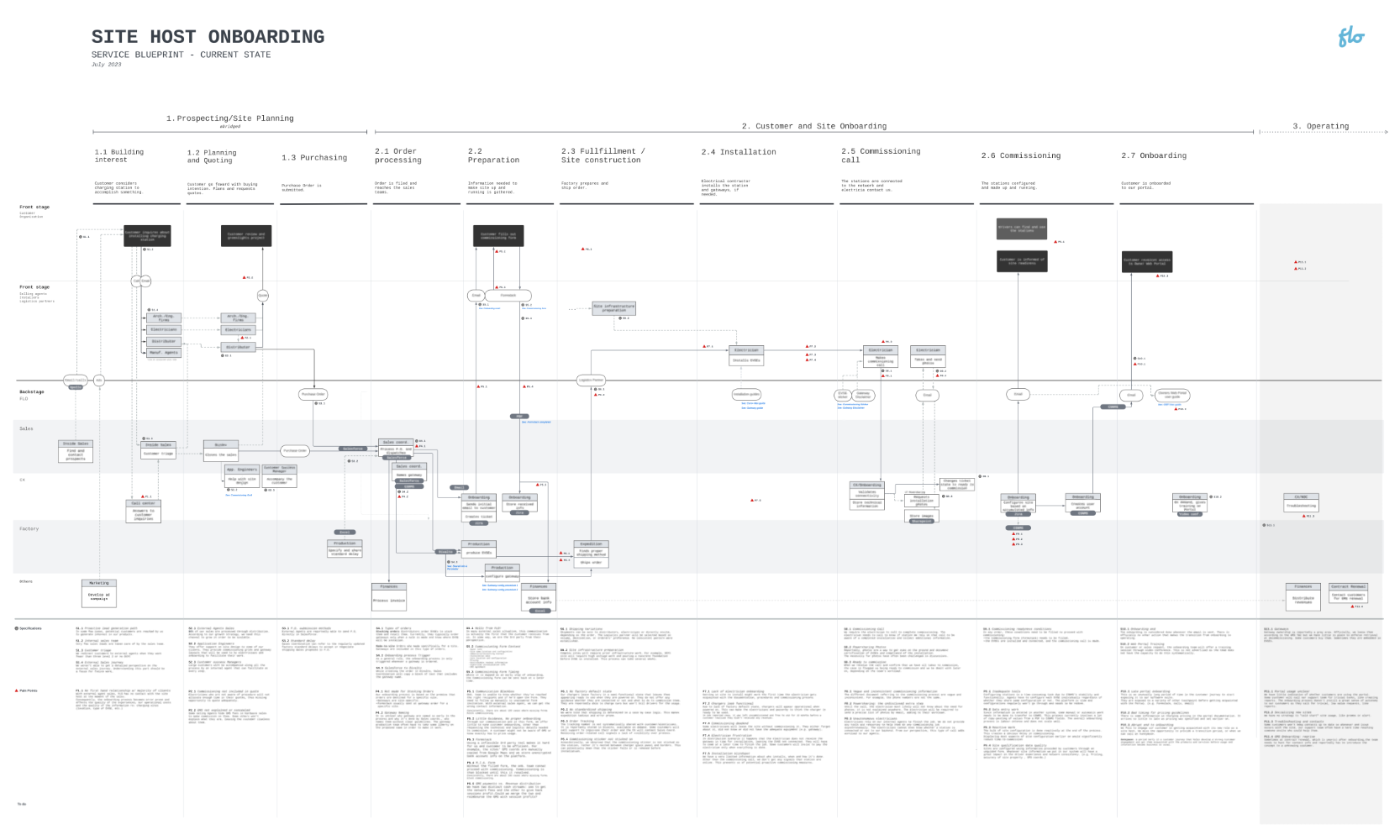
The blueprint revealed major strategic gaps, including the absence of a governance structure to oversee all touchpoints beyond the interface. I synthesized these insights to reframe the problem from an interface issue to a broader service design challenge, involving multiple teams and processes.
From this, I identified three key dimensions of the site owner onboarding experience that impacted overall customer relationships:
- Ensuring high-quality onboarding of sites to elevate the charging experience for drivers.
- Supporting partners (distribution and installation) to become champions of our products.
- Engaging site hosts as fully invested customers and network partners.
Recommendations and Socialization
Next, I organized a round of socialization sessions across the company, presenting the service blueprint and findings to different teams and C-level executives. These sessions:
- Raised awareness of the critical role the onboarding journey plays in company operations.
- Made the case for a transversal, governance-led approach to managing the customer journey.
- Influenced the project management roadmap by highlighting initiatives that directly addressed the service gaps identified.
Design approach
Single Initiatives vs Portfolio of Initiatives
One key realization from this process was that the solution could not be treated as a single initiative. Instead, the service design findings underscored the need for a portfolio of initiatives that together supported the overall customer experience. All initiatives shared common goals and key performance indicators (KPIs) to ensure cohesion.
Customer and Partner Research
In the second phase of discovery, I focused on customers and partners. I implemented a post-onboarding survey sent to all site hosts who had completed onboarding, gathering over 200 responses. This survey helped us:
- Understand customer profiles.
- Identify friction points in the onboarding process.
- Assess overall satisfaction.
- Build a pool of customers that we can contact for interviews
Additionally, I conducted in-depth interviews with partner organizations involved in the sale and deployment of sites. These conversations provided qualitative insights that fed directly into the service blueprint and subsequent strategy.
Target Experience
To complement the immediate and medium-term initiatives, I focused part of my efforts on co-creating a target onboarding experience for our next-generation products. This proactive vision was designed to influence the product development cycle for upcoming products.
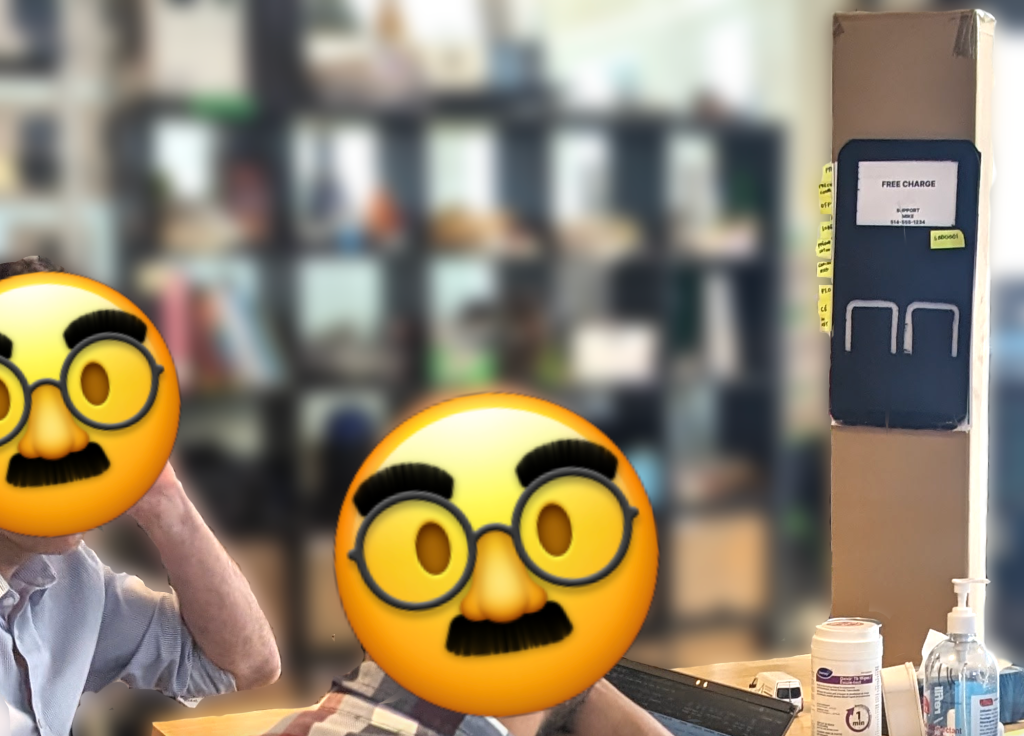
In collaboration with the Product Manager for next-gen chargers, we developed a vision called “From Factory to Field”, aimed at mapping every process and stakeholder involved, from charger inception at the factory to full functionality at the site. I organized a series of co-creation workshops with internal teams and customer representatives, resulting in:
- A target journey map illustrating the ideal onboarding flow.
- Prototypes for all onboarding touch point, both physical and digital.
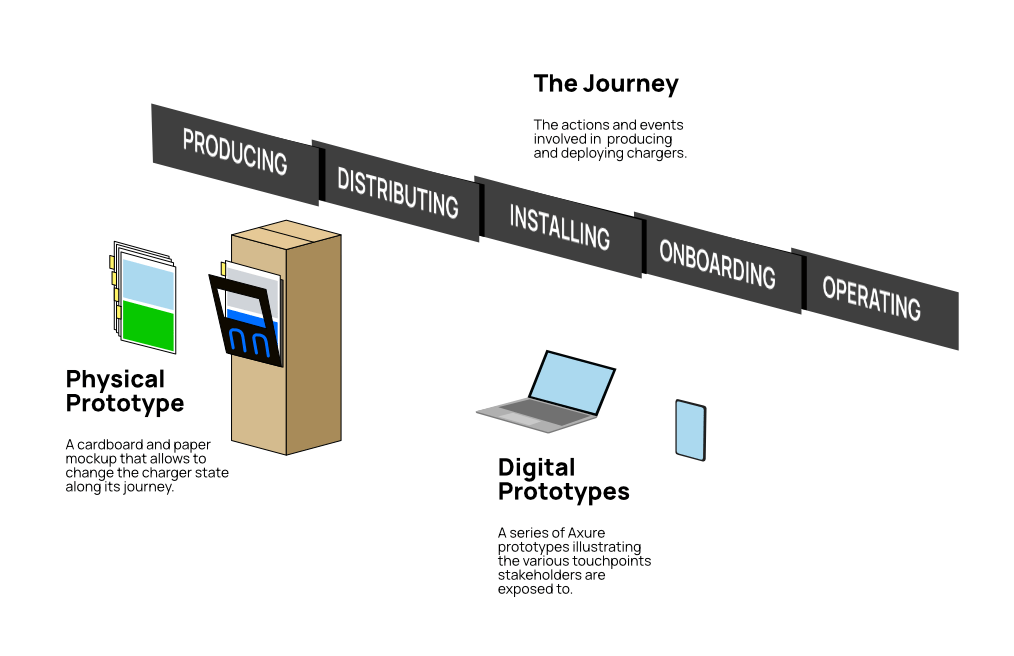
The outcome of these workshops was a clear and holistic vision that included strategic initiatives across key areas:
- Technology: Spanning hardware, firmware, software, and backend systems.
- Operations: Addressing manufacturing processes, enterprise architecture, and enhancing the customer support approach to improve overall service efficiency.
- Business: Focusing on distribution strategies, strengthening partner relationships, and expanding service offerings to deliver more value to site hosts and partners.
This initiative set the stage for the approach that would be adopted over the next few years, as next-generation products were developed and produced in line with the vision co-created during this project.
My Learnings
This project underscored the importance of reframing product-centric briefs into service design challenges to uncover broader organizational misalignments that impact the customer experience. I also recognized the scope and organizational reach that a service design initiative can have. Transversal alignment across teams was crucial during all phases of the project and remains essential for future steps.
Additionally, I applied my intrapreneurial spirit by leading the rescoped initiative, managing the activities, handling knowledge dissemination, and ensuring proper socialization of insights across the organization. This experience further reinforced the value of cross-functional collaboration and co-creation to deliver solutions that balance customer needs with operational feasibility.
 Ben Rochon